Blake Snyder

The Last Website on Screenwriting You'll Ever Need blog | store | news | calendar | media | bio

Tyler Perry’s Quiet Success

Today's Blog — at 12:25 pm on September 29, 2008

As a screenwriter ever interested in the entreprenurial spirit of our industry, I must confess admiration for Tyler Perry. Though his work is critically panned, his legion of fans is amazing, and loyal to a fault. And the list of his successes, including Diary of a Mad Black Woman and Madea’s Family Reunion, is all of a type — easy, family humor with a positive message.

Perry writes, directs, produces, and stars in comedies — often in the role of a cross-dressing matron — and he has turned his corner of the Atlanta film industry into a powerhouse of success. His secret?What I always claim is the most important aspect of any venture: Tyler knows his target market and caters to it unabashedly.

Much of the success of these films stems from Perry’s background in the church. Most of his projects begin as church plays. The bugs are worked out in front of and by the key demographic  – church goers, primarily woman and families – who consistently show up at the cineplex, too.  

Like the Marx Brothers, who took their stage plays on the road to test which jokes worked best before turning on the cameras, Perry has found a sweet spot both in his method and his target. And while he may not get the credit he deserves, his lesson for screenwriters and filmmakers is obvious: Know thy niche!

How few studios have a brand! When you say “Pixar,” you are saying 4-quadrant family films and know what to expect.  But more and more the niche marketing is left to individuals who deliver a “Judd Apatow film” or a “Quentin Tarantino movie,” and may indicate a future where we are carving out smaller, targeted groups for our own films.

What’s your target market? Be it the art house, 4 quadrant family, date movie,  prestige film, YouTube Generation short or global marketplace Indie, knowing who you are writing for, and loving them enough to cater to them, is more important than ever.

P.S. We had a GREAT Beats Weekend in Seattle, what a fantastic group of writers — and what amazingly well-targeted  movies they have going — of all types! Looking forward to the October 11 weekend in Los Angeles, which is almost sold out. Please contact rich@blakesnyder.com if you’d like to attend!


For more, check the archives

Misdirection and Surprise

Today's Blog — at 1:35 pm on September 25, 2008

Finally saw Tropic Thunder and really liked this Ben Stiller-directed comedy. The story is a movie in a movie about a group of actors who, Apocalypse Now-style, go into the jungle to shoot a film and wind up participating in a real life version of it. And apart from the solid cast and production values, including the single funniest way to get a director off the set, it is a great example of “misdirection and surprise.”

What is this time-honored screenwriting technique?

Misdirection and Surprise is the moviemaker’s gleeful way to keep an audience on its toes by keeping them forever guessing about what will happen next. It’s seen throughout Tropic Thunder.

(Spoiler alert!) From start to finish, we think this movie is going one way, then it goes another. We are set up for the old army veteran (Nick Nolte) to be a tough and cantakerous mentor only to learn — in a disarming way — that he is a fraud. We are “set up” to expect Ben Stiller’s character to be the one who ultimately leads the group of captured actors out of harm’s way, only to learn that he is the “Princess in the High Tower” who will need to be saved. We are even “set up” to have the boy he befriends and attempts to rescue in the Finale to be the one who “saves” him, only to see him tossed aside — literally — for being a pain in the neck.

We are set up for cliche, and have the rug pulled out from under us as an audience — and we love it!

That’s all screenwriting is. We take you by the hand and set you up for one thing, then take an ironic left turn. From the irony found in concept, to the surprise twists in characters and scenes, it’s the same.

Misdirection and Surprise is a great thing to consider in writing any screenplay, and a good excuse to see Tropic Thunder  to note how many left turns can be mined from turning cliches inside out.


For more, check the archives

Four Christmases

Today's Blog — at 9:22 am on September 22, 2008

I received news from Matt Allen and Caleb Wilson, the writers of Four Christmases, that their trailer was available online. And though we can’t tell everything from a trailer, this one made me laugh out loud three times in three minutes.  Here it is:

http://movies.yahoo.com/movie/1809961243/video/9706332

Four Christmases you may recall is a script I cite in Save the Cat! At that time, 2003, while writing Cat! I went through the recent spec script sales and picked a few that “made me jealous” — always a good sign! It’s a clever hook, good title, a mental image that “blooms” in my imagination, and since we are all looking for Christmas perennials, I noted that if I were an executive I would be interested in seeing that screenplay. I also noted, never having read the script, that the story would be “about” a young couple who in the course of their busy day visiting all four of their divorced parents would question their own marriage, and that the film would be served by multiple-aged casting that had found success in movies like Meet The Parents.

And lo!

The film stars Reese Witherspoon and Vince Vaughn, features Robert Duvall and Sissy Spacek, and will be released Thanksgiving and play through the holidays. 

Congrats to the writers of this high-concept winner (the final credits are Screenplay by Matt Allen & Caleb Wilson and Jon Lucas & Scott Moore, and Story by Matt Allen & Caleb Wilson).  A valuable lesson for all of us trying to craft a story that satisfies.  While “based on” the real life experience of one of the writers, it was only the “springboard” for the demands of a well-executed screenplay.


For more, check the archives

Yes!

Today's Blog — at 5:01 pm on September 18, 2008

Okay, it’s official: Blake Snyder– that being moi – WILL be appearing at the Screenwriting Expo in Los Angeles this November. Instead of giving three talks, as I did last year, I will be doing just one “Supercharged” one – on Friday morning, November 14, at 11:00 a.m.

My topic will be how to “Supercharge!” every aspect of your screenwriting. How do you wring every last drop of creativity from your logline? How do you deliver on the “promise of the premise” of your script — and  career! I will be trying out more new material from my work in progress, the third — and best — Cat! yet. I also hope to get into the “The Secret” essential for both good storytelling and career management, and inspire those in attendance to make this the best, and most creative, period of your life!

And Yes! I will be giving a talk this Sunday afternoon at 4 p.m. at Raleigh Studios in Hollywood for Robin Rowe and Gabrielle Pantera’s ScreenPlayLab. If you are not a member and would like to attend, please check out www.screenplaylab.com.

We will also be announcing soon the fall schedule of workshops and other appearances. I’m looking forward to two Beats Weekends, next week in Seattle and here in L.A. in October.

P.S. And here’s something for you to say Yes! to. I am looking for scripts in the vein of The Notebook or a feature length screenplay with a leading role for an actress in her 60s.  Please contact me through my email address with a logline if you have something that meets this requirement.

Thanks! See you soon!


For more, check the archives

Here We Go!

Today's Blog — at 12:39 pm on September 11, 2008

Ahhh, it’s my favorite time of year!

I love autumn leaves, cool weather, and the coming holidays — especially Thanksgiving.

I also love this part of the movie season, the “quality films” that will be up for Oscar nominations, always followed by “holiday films” that is the family friendly fare we love.  

We’ve had a good summer, solid box office, with one runaway hit and a slew of lesser ones. Oddly, my favorite “popcorn” movie was Ironman. And some of my other favorites include House Bunny, Kung Fu Panda, and Tropic Thunder. Silly, yes; fun, absolutely.  That’s what summer fare is about.

But that’s why the counter weight of more serious subjects is so welcome every Fall.

This is also one of my favorite seasons as a writer — spec season! And though it’s possible to sell a script all year round, it seems to be two times per year in which I’ve had good luck selling specs. It’s either in that period from the end of February up through June (during which time studios have their budgets in place and are buying a lot of specs) and that second shorter period between Labor Day and Thanksgiving with a little dab of a window between Thanksgiving and Christmas. Ah! The intersection of Art and Commerce!

I hope you’re ready! If you’ve been preparing this summer with a new spec or pitch, now’s the time.

And we are very busy here at Save the Cat! Industries. I am wrapping up Book 3, about to record audios, giving speeches to wonderful groups of writers — as I did last Saturday for the hugely successful Final Draft Take a Meeting event here in Los Angeles — and hopefully I will also be traveling to see the films I have been consulting on go into production on location.  Lots going on, all amazing stuff!

It’s been a great year, and it’s only getting better!

I want to make 2008 your most successful year yet! And we have just a few months to make those New Years goals come true.  I am happy to do anything I can to help you succeed.  Please check out our Forum for other writers who have access to resources you need, please come to one of our final classes for the year, and join our many Save the Cat! Writers Groups around the country — and the world!

And check out the success stories on our News page and imagine yourself telling us about your sale, option, newly acquired agent or manager, or screenwriting contest win! With enough Discipline, Focus, and Positive Energy, I know you will!

Please also contact me with any pitch, question, or concern. If I can provide an answer in an email, I will!

You can do it! I’m here to help!

Here we go! Let’s make each day count in this your most abundant year to date!


For more, check the archives

And the Winner Is…

Today's Blog — at 11:55 am on September 5, 2008

Let me start by saying how proud I am of the readers of this site!

We are creative, giving optimists with a great sense of humor and a glass-half-full world view. But the thing I am most amazed by is the white-hot talent on display!

I gave you an assignment in “Spinoff: The Contest”: Pick a minor character from a famous movie and imagine a prequel or sequel for him or her that catches the spirit of the original movie, yet is uniquely new.

Whether you know it or not, these fun little contests are the “Wax on, Wax off” exercises that help us stretch some very important muscles. Not only do we practice writing better loglines, but by addressing the confines of an “assignment” that is so like others we will face in our careers, the skills to “Give me the same thing, only different!” are strengthened.  And having just seen the play Wicked for the first time recently –the “prequel” of how the Wicked Witch of the West came to be in The Wizard of Oz –  it’s not out of the range of possibility that this exercise could lead to similar success. It’s a great thought-starter for sure!  

The contest asked you to mine the depths of your cinema subconsci to find those minor personalities tucked away in the corners of our movie memories – and what amazing Dennis Miller-like minutia we were treated to! Shawn M.L (#146) wondered what happened to Kareem Abdul-Jabbar after he was hauled out of the cockpit in Airplane! Kimota (#158) remembered “The Godmother,” wife of Marlon Brando’s Godfather,  and posed further adventures for Mrs. Corleone. Alison Block (#78) considered what Toto told his animal friends after he got back from Oz, with a hilariously titled “What Happens in Kansas, Stays in Kansas,” and Mike  Sweeney started with Steve Buscemi’s character in the Coen Brothers’ The Big Lebowski and gave us a “Donny” Kerabtsos bowling league prequel. Others like Andy Brown’s (#17) “Woodcock,” which told the further doings of the hapless Union Pacific guard in Butch Cassidy and the Sundance Kid, and jwmiller’s (#168) musing on “Saving Corporal Upham” made me say: Whooooa! Clearly this is a site for movie fans!

There were also some examples of movies I would actually like to see, and Pixar et al take note! If anyone is looking for possible sequels that sound as creative as their progenitors, check out Andrew M’s (#6) “Back to the Future Part IV,” Shawn M.L’s (#13) “Mutant Toy Story,” YeOlde Falconer’s (#83) “Mouse in the Matrix,” stina_maria’s (#120) “Professor Trelawney and the Sibyl of Sekhmet” Harry Potter re-do, and Rebecca Sharp’s (#79) really sharp idea for more Finding Nemo  called “Finding Dory.”  But the winner of the best idea for a sequel, no kidding, is Smitty (#48), who even gave us the poster: “Pixar Presents Cars 2 : Later Mater.” I’m serious, this would make a great direct to DVD release and has a terrific plot line. Bravo, Smitty!

Tales from the darkside got our attention and many a guilty laugh. I’m embarrassed to say I laughed out loud when I read  Don WIllis’ (#155) topical “SE’X’ Files,”  Russell Nichols’ (#129) “Grandpa Joe and the Chocolate Factory,” and Robby Garfinkel’s (#30) “Hello, Neighbor!” — brilliant!  But the guiltiest laughs are Hunter’s (#62) “The Little Melanoma” and Saeed’s (#63) “Jackass 3″ — HA!! Ooops! I mean…. Hee-hee-hee…

Funny titles? Take a bow! crAZRick’s (#5) “Snakes Changing Planes,” Randy Harrison’s (#23) “While You Were Peeping,” Russell Nichols’ (#37) “Pulp Free,” Scott W’s “Lethalest Weapon” are all great, but the one that makes me giggle most is Risa Romano (#138), who posed two in a row, “The Day After The Earth Stood Still” — awesome! — and maybe my favorite given the logline that follows, “Die Simply” — if only!

Am I stalling? You bet! So let’s get to the batch of RUNNERS UP that is so good any one of these beauties could be the winner — and got a lot of votes from our judges. These are just so great! They include:

– Shawn M.L. (#27) “The Wilson Triangle” 

– John F.’s (#68) “Smooth Chazz, Funeral Crasher”

– David T. Harwood (#125) “There Will Be Blush!”

– Hunter’s (#3) “Stockholm” — the early odds-on favorite!

Finally, down to our three winners, and oh how I hate to just pick three!

THIRD PLACE: ($50 gift certificate to Writers Store): Andy Brown’s (#24) “It’s A Wonderfully Loud Life” — Zuzu Bailey is now a full grown, married woman with four kids, that has become obsessed with ringing bells to help “angels get their wings.” After her husband is driven to the brink of insanity by  Zuzu’s incessant bell-ringing,  Zuzu must find a way to prove she’s not crazy, keep her family from falling apart and continue her calling as “an angel to the angels.”

SECOND PLACE:  ($100 gift certificate to the Writers Store): Doug J’s (#65) “Daddy Wars” — Balancing a busy schedule in the Senate, leading the rebel alliance and raising a teenage daughter is no easy feat for single dad Bail Organa (Jimmy Smits). Feisty daughter Leia (Amber Tamblyn) wants to follow in Dad’s political footsteps as class president but is side-tracked by the new bad boy (Shia LeBeouf) in school.  Droid butlers C-3PO and R2D2 make a special appearance providing comic relief or a shoulder to cry on just at the right moment. PG (adult situations, excessive visual effects, clunky dialogue and mild Jar Jar.)

FIRST PLACE: ($200 Gift Certificate to the Writers Store):  –Andrew W. (# 34) “Old” — In this sequel to “Big”, after a vicious wedgie at school, Billy Kopecki decides that he too wants to be big. He tracks down Zoltar, declares his wish to be “old,” and wakes up to find he looks like Mickey Rooney. Josh Baskin must convince the aged Billy to give up his decadent lifestyle of plaid pants, shuffleboard and 4 pm dinners.

Congratulations to everyone!


For more, check the archives

Resistance Is Fertile!

Beat Sheet, Today's Blog — at 7:37 am on August 26, 2008

I have been working on a dizzying number of projects of late.

In addition to my own writing, I hear or read dozens of movie ideas, treatments, and scripts every day. And my mental muscle in dealing with them gets a regular workout. Physically, I may need more days at the gym, but mentally I am buff! I am chisled! I am the Mr. Universe of story solving.

What all this brain exercise is good for is quickness to hear and see problems. This method, the Save the Cat! method of telling stories, really works. And the 50-point checklist we’ve developed in-house to expose any story’s weakness is so valuable. If I were a financier with a movie about to go into production, I would make sure I went down that list before any script was given the green light. No matter where your story is, or where you are — from the studio level, to the individual writer — the weak points of a script are the same. And if you are not looking for ways to fix them, the result can only be less than they could be.

If you are not sending your hero all the way back to show all the problems of his world at the beginning, I will send you there to explore them. If you have all action and no meaning, I will make you look at your Theme, and figure out what B Story it ties into, and why it is not connecting to the overall plot. If you are not delivering on the premise you pitched me, I will ask you to camp out in your Fun and Games section for a while and figure out why you are not giving me the “poster” — and force you to examine the real question: Is your premise not there to begin with?

And of course when I tell you this, very often your reaction is not a happy one.

You had it all worked out! It was perfect! Everyone else liked it! Why, Blake, don’t you?

And I can only say one thing in reply, at least in my head: Resistance is futile!

But resistance also builds 12 story muscles 12 ways.

The pushback between you and me is positively gorgeous! We argue and your story begins to build muscles too. It starts to get handsomer and more quick on its feet, and the awkward pause you had while explaining it suddenly goes away because I’ve forced you to vet yourself, and given you the means to do so, and expose your blind spots, and see the story for what it really is — or isn’t.

And after it’s all over, and you say, You were right! I smile. I didn’t do anything. You did it. I didn’t find your fix. I suggested a few. But you did the work. I just pushed back and made you build your own story muscles. Be proud of yourself.

You had the guts to try something new. You dared to give up your “contempt prior to investigation” that so many lesser writers never got over. And now you can stand up taller than before all by yourself.

Resistance, turns out, may be futile, but it’s also fertile and gives birth to an amazing array of better stories, better told, and with a better chance not only of selling but succeeding!


For more, check the archives

Where’s the Irony?

Beat Sheet, Today's Blog — at 9:02 am on August 21, 2008

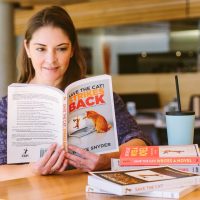
I am feverishly writing away my third Cat! book. It’s called Save the Cat! Strikes Back and subtitled More Trouble for Screenwriters To Get In To… And Out Of.

I am really having a ball. I’m incorporating everything I’ve learned in and out of the workshops, and via our email interactions, in the past few years. Working with writers and seeing the same problems crop up again and again allows me to see how we all make the same mistakes.

One thing that Save the Cat! is best known for, and no other screenwriting book really discusses, is “the idea.” That may be because I have always been “the poster guy,” the writer who loves concept and to whom other writers come to see if they have anything, and if not how can they put it in their idea.

What is your pitch, your logline, your encapsulation of the brand new movie idea that you love?

And how can we communicate that to the listener or reader of our pitch or logline without losing them?

We see it! We’re excited! We are inspired!

Why aren’t they?

In my new book I discuss the Three Things That Don’t Grab Me about your idea, because believe it or not, when I hear your pitch (and I’ve emailed back to thousands of you — often within 15 minutes!), the ones that don’t work fall into three very distinct types.

Among the deficiencies in an idea that doesn’t grab me is No Stakes — basically there is nothing riding on this story for your hero. Another is Tone. If I can’t tell if your idea is a drama or a comedy, trouble! Many times I have written back to a writer saying:” Ha! Hilarious idea!” only to be told it’s a searing drama. Oops! But believe it or not, that’s not my fault, that’s yours. If you aren’t indicating somehow what the tone of this idea is, you have fallen short.

The fix of an idea that doesn’t grab me — comedy or drama — almost always is to find the “irony” of it. What gets our attention, what is the “hook,” the “sizzle” of an idea? What’s “ironic” about Erin Brockovich is not the plot, which finds a crusader exposing the wrongs of a powerful company, but the fact that the person doing the crusading is the very last person on Earth who would be called to this duty. Irony is not only the “sizzle,” it hints at the transformation of the hero, and the size of the challenge as well.

Your idea is the same.

Where’s the irony of your idea? That’s not only what gets our attention, but what hints at a story about a hero that changes. These can all be indicated in your pitch or logline, little clues that give us a clue about what’s in your fevered imagination.

And saying it, right up front, grabbing our attention and luring us in for more, is the first step in inviting me into the darkness of your air-conditioned movie theater and finding a center seat in anticipation of a great experience!

P.S. I am loving the entries in our latest contest! If you want to check out some truly great writing, and some fevered — but hilarious — imaginations, check out “Spinoff: The Contest” Comments.  Keep ‘em coming!  Can’t wait to give out the prizes for this very fun competition.  Congratulations to all!


For more, check the archives

Spinoff: The Contest

Today's Blog — at 2:52 pm on August 14, 2008

One of the exciting things about being a movie fan is the potential to dig deeper into the imaginary lives of the characters we meet onscreen — even if that meeting is brief. 

There is a chance that we will see a movie 10 or 20 times during our lives. And I’m convinced that the success of “chopping up time” in movies like Pulp Fiction is due to our now commonplace habit —  mine anyway — to see a movie on cable in chunks. Very often I will see a new movie by catching a bit of the middle, filling in the end later, and finally seeing the beginning some other time… and still get it.

One of my favorite past times, as I watch a movie more than once, is thinking about its minor characters. Whatever happened to Serge from Beverly Hills Cop? The espresso-wielding omni-sexual Serge launched the career of Bronson Pinchot, and is one of the great character turns ever. But while we know Bronson starred in a fun TV series, Serge disappeared, even though he made a brief appearance in a later Cop installment.

Whatever happened to him?

We see this on TV too. Or don’t see it. The ellusive Marris, Niles’ ( David Hyde Pierce) wife on Frasier never was seen, although the theater of the mind filled in all kinds of pictures of her.  The neighbor on Tim Allen’s Home Improvement went to great lengths to stay off camera, too. 

But as I go deeper into more and more viewings of certain films, 10 or 20 times down the road, all kinds of questions come to mind:  Whatever happened to Bruno Kirby and Carrie Fisher in When Harry Met Sally… Did they go the distance as a married couple?  And what about the great lover Wallace Shawn portrayed in Manhattan, the one that so surprised Woody Allen when he and Diane Keaton ran into him while shopping? Did he and Diane ever get together again for one tumultuous sexual romp?

If you’ve ever wondered about the lives of these minor characters prior to the entry into our lives, or what happened to them after the movie was over, here’s your chance to let your imagination run wild.

And here’s a chance to turn your imaginations into cold, hard cash!

“Spinoff” is the name of our latest contest and here are the rules:

1. Take a well-known movie and pick a minor character — or one that is referenced yet never seen.

2. Make him or her the star of a new movie in which we answer the question: What happened to them AFTER the movie? or Where did he or she come from, and what were they doing BEFORE the movie began?

3. Pick a title that vaguely smacks of that of the original movie and…

4. Write a logline of that movie that might appear in TV Guide, or a cable channel selection.

EXAMPLE:

KEYSER PERMANENTE — Sequel to The Usual Suspects finds its disgraced police captain (Chazz Palminteri) busted down to an HMO hospital security detail, until a series of murders in the Physical Therapy unit — and another broken coffee cup — draw him back into a case that still might be solved.

The winner this time will get a $200 shopping spree at The Writers Store (www.writersstore.com/?e=1061).  Second Place: a $100 spree. Third place: a $50 spree, with Runners Up being noted. Yes, wit counts! But so does creativity. So let’s dig deep into our mental movie wheelhouses and find what happened to those missing characters we’ve always wondered about! 

The contest results will be announced after Labor Day, giving you two weeks to come up with a winner!

Good luck to one and all! I will be watching Comments for the fabulous entries I’m sure will folllow!


For more, check the archives

Other Books on Story and Screenwriting

Today's Blog — at 5:44 pm on August 11, 2008

I am often asked if, other than my own books, I recommend any others for readers interested in writing.

Yes! is my happy answer.

I love books on writing, and I’m always inspired by them. And I’ve used many in my own career to get a better grasp on my work.

Of course, there is the master, Syd Field, and his classic, Screenplay. Where would any of us be without this brilliant insight into structure and story? Syd Field is the godfather of screenwriting methodology. And a close second is John Truby whose long awaited book, The Anatomy of Story, encapsulates his theories.

I also love Viki King’s book How To Write a Movie in 21 Days — and used it to write and sell a script in the titular time frame. My other favorites include David Trottier’s Screenwriter’s Bible and any book by Karl Iglesias (either 101 Habits of Successful Screenwriter or Writing for Emotional Impact – both big favs!)

For theory, there is nothing better than a couple you may have heard of, and ones that are on my shelf at the ready: The Uses of Enchantment by Bruno Breitleheim and The Art of Dramatic Writing by  Lajos Egri are ones I often read just for fun — and to get inspired about how fairy tales and folk tales still inform us.

And as far as books about the business are concerned, I still reference both Hello, He Lied by Lynda Obst, Breakfast with Sharks by Michael Lent, and the classic Memo by David O. Selznick (which shows how the more things change the more they stay the same). These are insider looks at Hollywood,  all fun reads.

Recently there is a whole new batch of future classics. Tops on my list is my buddy Will Akers’ book, called bluntly, Your Screenplay Sucks! Will’s wonderful treatise is chalk full of things I’ve always wanted to point out to writers about their scripts, and covers everything from unclear thinking to bonehead mistakes we screenwriters make that scream out: Don’t buy my script! Yes, I’m prejudiced, but Will’s book is great.

I also really like Cinematic Storytelling by Jennifer Van Sijll. These latter two books are both found in my current publisher’s stable. Michael Wiese Publishing has really cornered the market on the best books out there for entertainment, on every subject from script to directing and producing to post-production.

This goes for my other Michael Wiese favorite author, Michael Hauge, whose most recent MWP book, Selling Your Story in Sixty Seconds is absolutely fantastic, and a great companion to Michael’s classic Writing Screenplays That Sell. Also in the MWP family now is Linda Seger, whose new book is And The Best Screenplay Goes To… which covers five award-winning screenplays, and how they got that way.

And of course for pure inspiration, I always pick up On Writing by Stephen King, Bird by Bird by Anne Lamott, and, believe it or not, the poetry of T.S. Elliot, William Butler Yeats, The Bible (King James edition), and any novel by Vladimir Nabokov, F. Scott Fitzgerald, or Charles Bukowski. For some reason, the joyful use of language — juicy, lip-smacking words on a page — make me want to run to the word processor.

I hope this list is inspiring. What inspires you? That’s the question here in August! Inspire me and I will write great, lovely stories and screenplays, and build them into an empire of  word pictures that stand…

… forever!


For more, check the archives


store


$19.99
Buy it Now!

software updates

If you've purchased version 1.0 or 2.0 of the Save the Cat!™ Story Structure Software, there are updates available.

If you want to upgrade from 1.0 to 2.0, please visit our store.

news

Richardson’s Competing in Austin

forum


The Blake Snyder community is NOW OPEN!


find something


Or browse the archives


Los Angeles
October 11-12
Beats Workshop


Beats Workshop
October 11-12

For Information: rich@blakesnyder.com


the latest

JUST ADDED: Portland, OR Beats Workshop, November 22-23

For Information: rich@blakesnyder.com

our development partner


Final Draft, Inc. strives to educate, advance and celebrate the scriptwriter with a suite of offerings that include software, services, publications and events. Since its foundation in 1991, Final Draft scriptwriting software has become the Hollywood professional's choice and the world's #1-selling scriptwriting program. For more information about Final Draft and its products, visit www.finaldraft.com.